
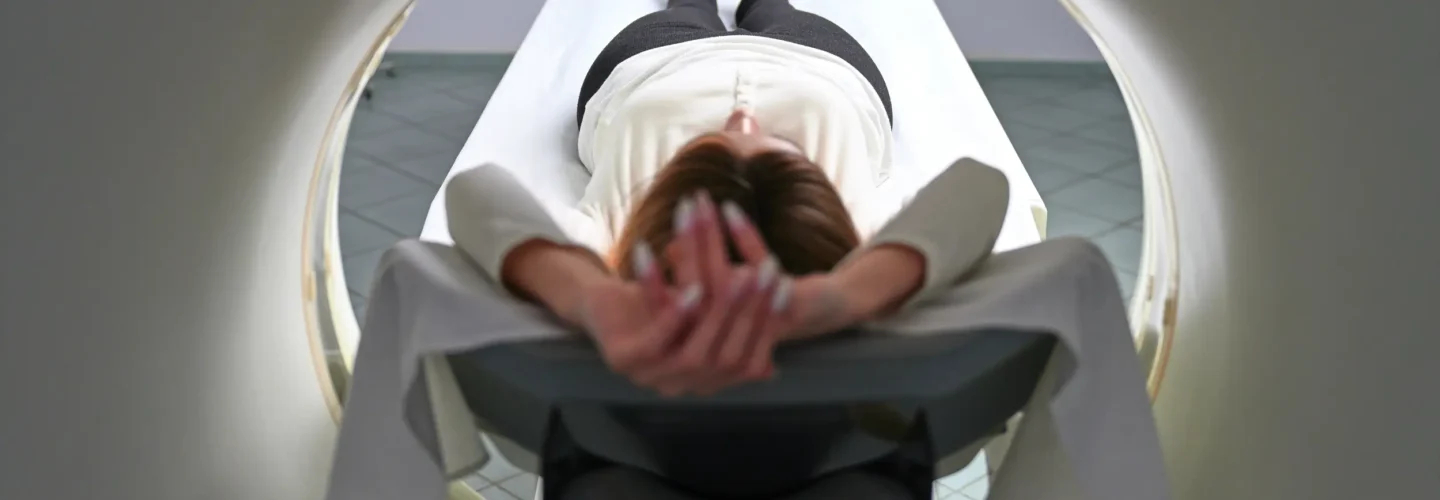
Catching lung cancer early when it is most treatable
Lung cancer is the leading cause of cancer-related death in the United States. However, there is a powerful tool to change this narrative: early detection through low-dose CT (LDCT) screening.
When lung cancer is caught early—before it spreads—the five-year survival rate increases by 63%. Because early-stage lung cancer rarely causes noticeable symptoms, screening is your best defense to identify concerns before they progress.
Who should be screened?
The U.S. Preventive Services Task Force (USPSTF) recommends annual lung cancer screenings for individuals who meet all of the following criteria:
- Age: between 50 and 80 years old
- Prior diagnosis: have never been diagnosed with lung cancer
- Smoking history: have a 20-pack-year smoking history
- Current status: are a current smoker or have quit smoking within the last 15 years
Other key risk factors
Even if you do not meet the exact USPSTF criteria, you may still be at elevated risk and should discuss screening options with your doctor if you have:
- A history of COPD (chronic obstructive pulmonary disease) or other chronic lung conditions
- A family history of lung cancer
- Prolonged occupational exposure to harmful substances like asbestos or radon
If you fall into any of these risk profiles, please speak with your primary care provider about your imaging options.
What is a “20-pack-year” history?
A “pack-year” is a formula doctors use to measure your lifetime tobacco exposure. It is calculated by multiplying the number of cigarette packs smoked per day by the number of years you smoked.
| Daily smoking amount | Number of years | Total pack years |
| 1 pack per day | 20 years | 20 pack-years (1 × 20) |
| 1/2 pack per day | 40 years | 20 pack-years (0.5 × 40) |
| 2 packs per day | 10 years | 20 pack-years (2 × 10) |
Not sure about your history? You can easily calculate your exact pack-years using the Should I Screen’s online tool.
How to get your lung screening
Getting screened is a fast and painless process. Follow these steps to schedule your low-dose CT scan with Maimonides.
Step 1: Talk to your doctor
A physician’s referral is required before you can get screened. Schedule an appointment with your primary care provider to discuss your eligibility. Your doctor must write a referral for a low-dose CT (LDCT) scan before we can schedule your imaging.
Step 2: Submit your referral
Once you have your doctor’s referral, send it directly to our Lung Screening Program via fax or email:
- Fax: 718-635-6122
- Email: LungScreening@maimo.org
Step 3: Schedule your scan
After your referral has been submitted, you can schedule your scan through our dedicated scheduling line. Call our team directly at 718-283-2059 to find an appointment time that works for you.
Call to schedule: 718-283-2059
Need to see a lung specialist or have a previously identified issue evaluated? You can reach our dedicated Lung Nodule Clinic or consult a pulmonologist by calling 718-283-8413.
Rapid assessment for concerning results
If you’ve had a scan elsewhere that showed potential issues, the Maimonides Rapid Assessment Service ensures you can see a specialist quickly, often within two business days, to discuss the next steps. Find out if you qualify for a screening:
Understanding lung nodules and active surveillance
When radiologists review your screening scan, they look for small spots called lung nodules.
Lung nodules are incredibly common—found in up to 24% of people who get screened. They are small, clumped-cell spots that can form as a result of past lung infections, smoking, or environmental exposures (such as air pollution, asbestos, or radon).
What is active surveillance?
Because some lung nodules have the potential to change, grow, or develop into cancer over time, doctors use active surveillance. This means monitoring the nodule closely with follow-up scans at scheduled intervals. If a nodule starts to change, your team can address it immediately—long before it becomes a major health concern.
To standardize how we monitor these nodules, Maimonides uses the national Lung-RADS (Lung Imaging Reporting and Data System) scoring system:
| Lung-RADS level | What it means | Recommended follow-up |
| Category 1 and 2 | Negative / benign: Excellent news. No suspicious spots found. | Return for your standard annual (every year) screening. |
| Category 3 | Probably benign: Very low chance of cancer, but needs tracking. | Short-interval follow-up scan in 6 months. |
| Category 4 | Suspicious: Requires closer inspection to rule out cancer. | Diagnostic testing, biopsy, or a follow-up scan in 1 to 3 months. |
The best way to lower your risk: Quit smoking
While screening helps catch cancer early, stopping smoking is the absolute best way to prevent it from developing in the first place. Quitting is incredibly difficult, but you don’t have to do it alone.
Maimonides Health offers dedicated, compassionate support programs to help you succeed:
- Maimonides Smoking Cessation Program: Email us at QuitSmoking@maimo.org to get started.
- New York State Quitline: Call 1-866-NY-QUITS (1-866-697-8487) for free, confidential coaching and support.
Our screening locations
Maimonides Health offers lung screenings and follow-up care at our state-of-the-art facilities in Brooklyn.
Recognized for elite standards of care
When you choose Maimonides Health for your lung screening, you are getting care from a program recognized at the highest national levels for safety, quality, and clinical excellence.
GO2 Lung Cancer Screening Center of Excellence
Maimonides is designated as a GO2 Lung Cancer Screening Center of Excellence. This prestigious designation is awarded by the GO2 for Lung Cancer organization to elite facilities that:
- Adhere strictly to evidence-based, national guidelines—including National Comprehensive Cancer Network (NCCN) and USPSTF—to ensure scans are safe and medically appropriate
- Utilize a multidisciplinary team approach involving pulmonologists, thoracic surgeons, oncologists, and radiologists to manage any concerning findings
- Incorporate high-quality, patient-centered education and comprehensive smoking cessation support directly into the care plan
ACR-designated Lung Cancer Screening Center
We are also fully designated as an American College of Radiology (ACR) Lung Cancer Screening Center. This means Maimonides has earned the “gold standard” in medical imaging safety. To achieve this:
- Our facility maintains active ACR accreditation in computed tomography (CT).
- We undergo rigorous, independent peer-review evaluations of our imaging protocols, equipment performance, and staff qualifications.
- We utilize exceptionally low-dose radiation protocols specifically designed to keep patients safe during their regular, annual screenings.