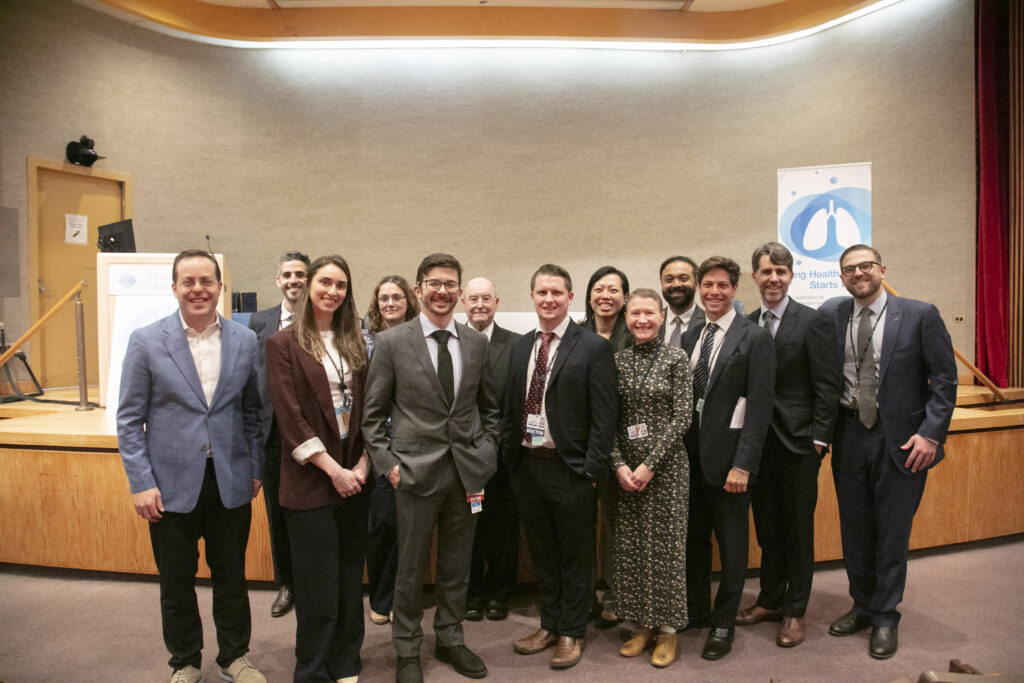
Maimonides Health held its Lung Cancer Symposium on Friday, October 31, with the theme of “Comprehensive Lung Cancer Care: Bridging Screening, Diagnosis, and Treatment.” The half-day symposium educated and engaged hospital-based and community providers to enhance their knowledge and clinical practice in the continuum of lung cancer care.
More than 100 clinicians attended in person and virtually to view presentations from Maimonides physicians and surgeons, as well as a panel discussion and opportunities for collaborative case-based learning.
Regional Leadership in Lung Cancer Care
“Lung cancer remains the leading cause of cancer-related deaths in the United States,” said Jason Shaw, MD, Director of General Thoracic Surgery and Director of Maimonides’ Lung Screening Program. “Although low-dose CT screening has been the standard of care for over a decade and has proven lifesaving, many patients and providers remainunaware of current lung cancer screening guidelines and best practices for integration into care. Improving early detection and access to innovative treatment options is more critical than ever.”
The program highlighted the latest evidence-based advances across the continuum of care—from prevention and early detection to minimally invasive diagnostic innovations and targeted therapies. Throughout each topic, speakers emphasized collaboration between pulmonology, thoracic surgery, oncology, radiation oncology, and radiology mirroring Maimonides’ approach to care to deliver the best outcomes for patients.
Combating Barriers to Screening
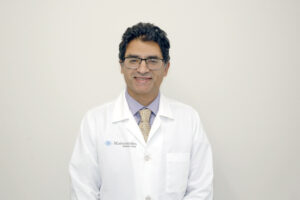
Clinicians attending the lung cancer symposium gained valuable insights into the most current knowledge on lung cancer screening eligibility, as well as strategies to increase the proportion of eligible patients who get screened annually. Odai Sinokrot, MD, pulmonologist and critical care specialist at Maimonides, presented on “Lung Cancer Screening: Navigating Benefits and Barriers.”
Dr. Sinokrot discussed the many challenges surrounding lung cancer screening, and ways in which providers canminimize disparities and help eligible patients reduce their risk of lung cancer death. Barriers to lung cancer screening include lack of awareness on both patient and provider ends, lack of access to screening, cost concerns, fear, stigma, and misconceptions surrounding potential harms associated with screening, like radiation exposure or false positive results.
“Providers and patients alike need to be aware of the evidence that shows why low-dose CT screening is so important,” said Dr. Sinokrot. “Screening annually creates a relative risk reduction in cancer death by 20%. And while smoking cessation efforts remain a high priority, our next best line of defense—these screening guideline—remain highly underutilized.”
According to Dr. Sinokrot, participation rates remain below 15% of currently eligible individuals, contrasting sharply with 67% to 69% participation rates for breast and colorectal cancer screening. Of those patients, only 55% return for follow-up scans. To be most effective, patients eligible for screening must be screened yearly. Maimonides’ Lung Cancer Screening Program has above-average retention rates, with more than 70% of patients returning for annual scans, a metric that Dr. Sinokrot attributes to communicative staff who reiterate to patients the way the screening process works, ensuring that they are aware it’s not a one-time process.
“Our screening program prioritizes compassionate, nonjudgmental care and communication, which is key to diagnosing and treating a disease with this level of stigma attached to it,” said Dr. Sinokrot. “Now, however, more patients who have never smoked or who are outside the screening guidelines are being diagnosed with lung cancer. As we look toward the future of lung cancer screening, these techniques can be implemented on a broader level for patients like Asian and Black women, who are at increased risk, and those with a history of exposure to environmental carcinogens like asbestos, pollution, or secondhand smoke.”
Dr. Sinokrot also discussed Maimonides’ new Lung Nodule Clinic, which plays a vital role in ensuring that individuals identified with lung nodules through screening receive timely, accurate, and coordinated care. Lung nodules are common findings on low-dose CT scans, and while most are benign, a small percentage represent early-stage lung cancers. The clinic provides a structured pathway for evaluation, diagnosis, and follow-up, reducing the risk of missed or delayed cancer diagnoses.
Robotic Navigational Bronchoscopy
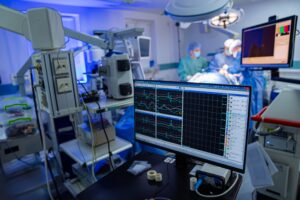
A major theme of the symposium this year was the integration of cutting-edge technology, including robotic navigational bronchoscopy. This technology combines robotic precision with advanced imaging and navigation systems to access and biopsy small or difficult-to-reach lung nodules with greater accuracy and safety, representing a major advancement in early diagnosis and management of lung cancer.
Dr. Shaw, in his presentation, “Bringing Precision to the Patient: Advances in Lung Cancer Diagnosis,” discussed how robotic navigational bronchoscopy is helping providers at Maimonides and throughout the field offer curative treatments to more patients through early and accurate diagnosis.
“Because treatment options are limited once lung cancer reaches later stages, the capacity to detect early-stage lung cancers that this robotic navigational bronchoscopy affords us is now a critical part of our diagnosis and intervention process,” said Dr. Shaw.
The robotic navigational bronchoscopy system has greater reach, stability, and precision than preceding biopsy techniques like percutaneous biopsy and traditional bronchoscopy, allowing surgeons to access all lung segments, far beyond central airways.
“We’ve conducted more than 200 robotic bronchoscopy cases since the launch of this technology at Maimonides,” said Dr. Shaw. “Data from the first 190 cases shows a diagnostic accuracy rate of 80%, with most of these nodules in the outer third, apices, and previously obscured locations in the lungs. Utilizing 3D fluoroscopy in the procedure, raises accuracy rates to over 90%. This translates to a total time from nodule detection to treatment under 17 days, marking a paradigm shift in the diagnostic process.”
Another benefit of robotic navigational bronchoscopy is the ability to look at multiple lesions and nodules at once, which helps providers make optimal treatment recommendations. The system is also useful for bilateral nodules, which previously required examination of one side at a time to minimize pneumothorax risk. In fact, overall pneumothorax risk with the robotic system drops from 28% to 3.3%, compared to transthoracic needle biopsy.
Dr. Shaw discussed the Maimonides lung cancer care team’s approach to adjusting to navigational bronchoscopysuccessfully, as well as potential for future applications for therapeutic treatments using the robotic system.
“Just as this has opened new avenues in diagnosing lung cancer, it also has huge potential for treating patients with limited options, including those who may not be able to receive radiation or surgical treatments, or whose cancer has progressed despite other treatment,” he said. “It even opens up future possibilities for condensing diagnosis, staging, and surgical therapy into a single procedure as a first-line defense against lung cancer. The strides we have made in accurate diagnostics and cutting time from diagnosis to treatment have made a huge difference for patients, and this technology represents the next step in lung cancer treatment progress.”
Multidisciplinary Lung Cancer Management Talks
Other presentations from Maimonides physicians and surgeons included:
- “Tobacco Cessation as the First Step in Lung Cancer Prevention” by Claudia De Araujo Duarte, MD, pulmonologist and critical care physician.
- “Evolving Imaging Frontiers in Lung Cancer Detection,” by Steven Esses, MD, diagnostic radiologist.
- “Surgical Management of Locally Advanced Lung Cancer: Patient Selection, Techniques, and Outcomes,” by Antony Delliturri, DO, advanced robotic thoracic and foregut surgeon.
- “When Surgery Is Not an Option: The Role of SBRT in Lung Cancer,” by Jared Rowley, MD, radiation oncologist.
- “Targeted Therapy in Lung Cancer: Current and Future Directions,” by Julie Huang, DO, hematologist/oncologist.
 Additionally, a panel discussion moderated by Maimonides thoracic surgeon Steven Herman, MD, featured Dr. Shaw, Dr. Sinokrot, Dr. Huang, Dr. Rowley, radiologist Irina Kissin, MD, pulmonologist Ravi Patti, MD, and pathologist Meredith Pittman, MD.
Spreading Knowledge to Save Lives
This is not the first Lung Cancer Symposium hosted at Maimonides; it is part of an ongoing annual series, designed to advance lung cancer care within the institution and the community, particularly through education of pulmonologists, oncologists, thoracic surgeons, radiologists, primary care clinicians, advanced practice providers, nurses and other healthcare professionals. Attendees gained valuable insights into the most current knowledge on lung cancer screening eligibility and strategies to increase the proportion of eligible patients who get screened annually.
“Our goal for this symposium was to help clinicians from Maimonides, other health centers, and around the community integrate new techniques, technologies, and evidence-based approaches into their practice,” said Dr. Sinokrot.
“Lung cancer care is changing rapidly, and we’re incredibly proud to be making these strides to set the standard for care here in Brooklyn,” said Dr. Shaw. “Sharing these updates with providers and community members—and bringing this proactive approach to meet patients where they are—is critical to driving down lung cancer mortality.”
As a leading facility for lung cancer care, our lung cancer program is a recipient of the Outstanding Achievement Award from the American College of Surgeons’ Commission on Cancer and has been designated as a Screening Center of Excellence by the Lung Cancer Alliance. Maimonides’ Lung Cancer Screening Program has conducted more than 5,000 low-dose CT screenings since its launch in 2013. This year, Maimonides also launched its Smoking Cessation Program, in which patients can get care from a trained tobacco treatment specialist through smoking cessation groups.
Learn more about lung cancer care at Maimonides online or by phone at 718-765-2500. To schedule or refer a patient for lung cancer screening, call 718-283-2059 or sign up online. For our Rapid Assessment Service for patients with concerning imaging results or symptoms, call 718-765-2752. For Lung Nodule Clinic appointments and referrals, call 718-283-8413.