
Good health requires good sleep
Good sleep is the basis of good health. When you don’t sleep well, it affects your mood, your focus, and your body.
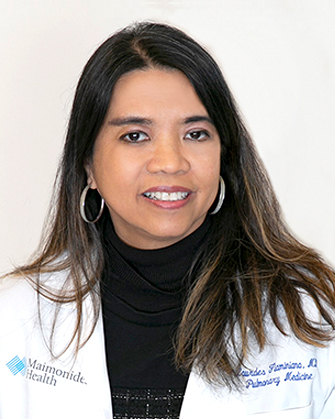
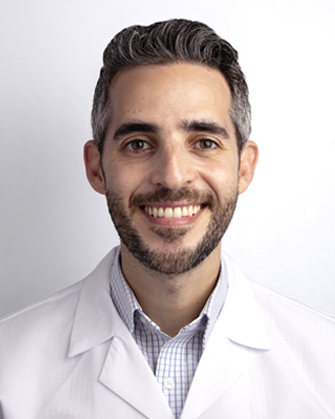
At the Maimonides Health Center for Sleep Disorders in Brooklyn, we find out what’s keeping you from sleeping well and help you fix it. We offer seven types of sleep studies, in our sleep lab and at home.
This page is for adults ages 18 and older. For children and teens, visit our Pediatric Sleep Medicine Program. Children and teens in the pediatric program need a new referral from their doctor to join the adult program when they turn 18.
Why good sleep matters
About 1 in 3 adults in the U.S. don’t get enough sleep.
Untreated sleep problems, like sleep apnea, can raise your risk of:
- High blood pressure
- Heart disease and heart failure
- Stroke
- Type 2 diabetes
Most sleep disorders can be treated. The first step is finding out what’s going on.
Is your sleep affecting your life?
Ask yourself:
- Do I feel sleepy during the day, even after a full night in bed?
- Do I doze off while reading, watching TV, or driving?
- Has someone told me I snore loudly, gasp, or stop breathing in my sleep?
- Do I have trouble falling asleep or staying asleep?
- Do my legs feel restless or jumpy at night?
If you answered yes to any of these, a sleep study may help. Your doctor may ask you to fill out a short sleepiness questionnaire called the Epworth Sleepiness Scale.
Why choose Maimonides Health Center for Sleep Disorders
- A team of sleep experts: Board-certified sleep doctors and registered sleep technologists lead your care. They work with Maimonides specialists in lung care; neurology; ear, nose, and throat (ENT); heart care; and behavioral health.
- At-home tests mailed to you: Some sleep studies can be conducted in the comfort of your own home. We ship the equipment to your door. You mail it back when you’re done.
- Care for every age: Our sleep lab tests both adults and children.
- Help with insurance: We check your coverage and get approval before your study.
Sleep disorders we treat
We care for adults with many sleep problems, including:
- Central sleep apnea: Your brain doesn’t tell your body to breathe the way it should during sleep.
- Circadian rhythm disorders: Your body clock doesn’t match your schedule, which is common with night shifts.
- Insomnia: You have trouble falling asleep or staying asleep.
- Limb movement disorders: Your legs or arms jerk while you sleep.
- Loud snoring: This can be a sign of sleep apnea.
- Narcolepsy and daytime sleepiness: You feel very sleepy during the day or fall asleep without warning.
- Nighttime seizures: Seizures happen while you sleep.
- Obstructive sleep apnea: Your airway gets blocked while you sleep, and you stop breathing for short periods.
- REM sleep behavior disorder and nightmares: You act out your dreams or have bad dreams that wake you.
- Restless legs syndrome: You feel a strong urge to move your legs at night.
What is a sleep study?
A sleep study tracks what your body does while you sleep, like your breathing, oxygen level, heart rate, brain waves, and movement. It doesn’t hurt, and there are no needles. Your doctor will choose the right study for you.
At-home sleep studies
With a home sleep test (HST), you sleep in your own bed with a small device that tracks your breathing, oxygen level, and heart rate. It’s most often used to check adults for obstructive sleep apnea.
We work with a trusted company partner who mails the sleep study equipment directly to your door and facilitates easy returns when you are finished. They offer 24/7 customer service support if you have any questions about the equipment.
You’ll need an in-lab study instead if you:
- Are under 18
- May have restless legs syndrome
- Have heart failure or atrial fibrillation (AFib)
- Have a brain or nerve condition, such as seizures
In-lab sleep studies
We offer six kinds of in-lab sleep studies:
- CPAP/BiPAP study: Finds the right air pressure for your CPAP (continuous positive airway pressure) or BiPAP (bi-level positive airway pressure) machine. These machines blow gentle air through a mask to keep your airway open.
- Maintenance of wakefulness test (MWT): Checks how well you can stay awake in a quiet room. It’s often needed for people who drive buses or trucks or run heavy equipment.
- Multiple sleep latency test (MSLT): Five short naps the day after an overnight study. It checks how sleepy you are during the day and looks for narcolepsy.
- Nocturnal polysomnography study (NPSG): An overnight study that helps find the cause of your sleep problem. It’s often the first test. If you work nights, you can do it during the day.
- PAP-Nap: A 2- to 3-hour daytime nap study that helps you get used to your PAP (positive airway pressure) mask and machine.
- Split night study: Testing and treatment in one night. If the first half shows severe sleep apnea, we start PAP therapy for the second half.
The MSLT and MWT each take about 10 hours. In the event we need more data than we are able to acquire in one night, we may ask you to come back for an extended sleep study.
Ongoing care
After your at-home or in-lab sleep study, we offer ongoing care, including:
- Follow-up visits with a sleep doctor to check how your treatment is working
- PAP machine check-ins, where a technologist reviews your machine’s data and shows you how to care for it
- Help getting your CPAP or BiPAP machine and supplies
What to expect at your in-lab sleep study
Spending the night in a sleep lab can feel strange. Our team is close by all night to keep you safe and comfortable. You’ll sleep in a quiet, dark, private room with its own shower. A family member can stay with you.
Before your visit, we’ll email you a packet that explains how to get ready. If you’re allergic to medical tape or glue, let us know.
- Check in: Fill out a few forms and change into what you normally sleep in.
- Get set up: Your technologist explains the study and places small sensors on your head, face, chest, and legs. This takes about an hour.
- Relax: You’ll have about an hour to read or unwind before bed.
- Sleep: Lights go out between 10:00 and 11:00 pm. Need to use the bathroom? Tell your technologist through the intercom. A camera records the study for medical use only.
- Wake up: Most people wake up around 6:00 am. After the sensors come off, you can shower and head out.
Ready to get started?
You’ll need a referral from your doctor for a sleep study. Ask your doctor if a sleep study is right for you.
If you’d like to schedule a consultation with one of our sleep specialists or pulmonologists, you can schedule online.
Schedule a consultation online
Questions about your sleep study? Call us:
- In-lab studies: 718-283-2900
- At-home studies: 718-283-2908