Trauma is the number one killer of children ages 1 to 18. When a child is injured, whether through a car accident, a fall,or a violent event, what happens in the first hour is the single greatest factor in whether they survive and how fully they recover.
That hour begins the moment EMS arrives on scene. It runs through the trauma bay in the Emergency Department, into the operating room if needed, and continues in the Pediatric Intensive Care Unit (PICU) and through rehabilitation. Every link in that chain is critical.
Maimonides Children’s Hospital is Brooklyn’s only Pediatric Trauma Center accredited by the American College of Surgeons. For children and families across the borough, that’s important. Care at a dedicated trauma center is associated with decreased mortality as compared to a non-trauma center emergency department (ED)1.
Expert, multispecialty pediatric trauma care
According to Lynn Model, MD, MS, FACS, FAAP, Director of Pediatric Trauma Services at Maimonides Children’s Hospital, a dedicated pediatric trauma center is something far more intentional than a well-equipped ED.
“It is an extensive set of facilities and personnel that integrate to deliver a system of care to injured children,” said Dr. Model. “This starts with the EMS caring for patients and bringing them in as soon as possible, and then includes trauma surgeons, emergency medicine physicians, and nurses on the front line who respond when a patient arrives, plus pediatric hospitalists, ICU clinical staff, and pediatric specialists who provide ongoing care throughout each patient’s stay. Care teams are prepared to offer the most complex emergency care 24/7 for patients who need it.”
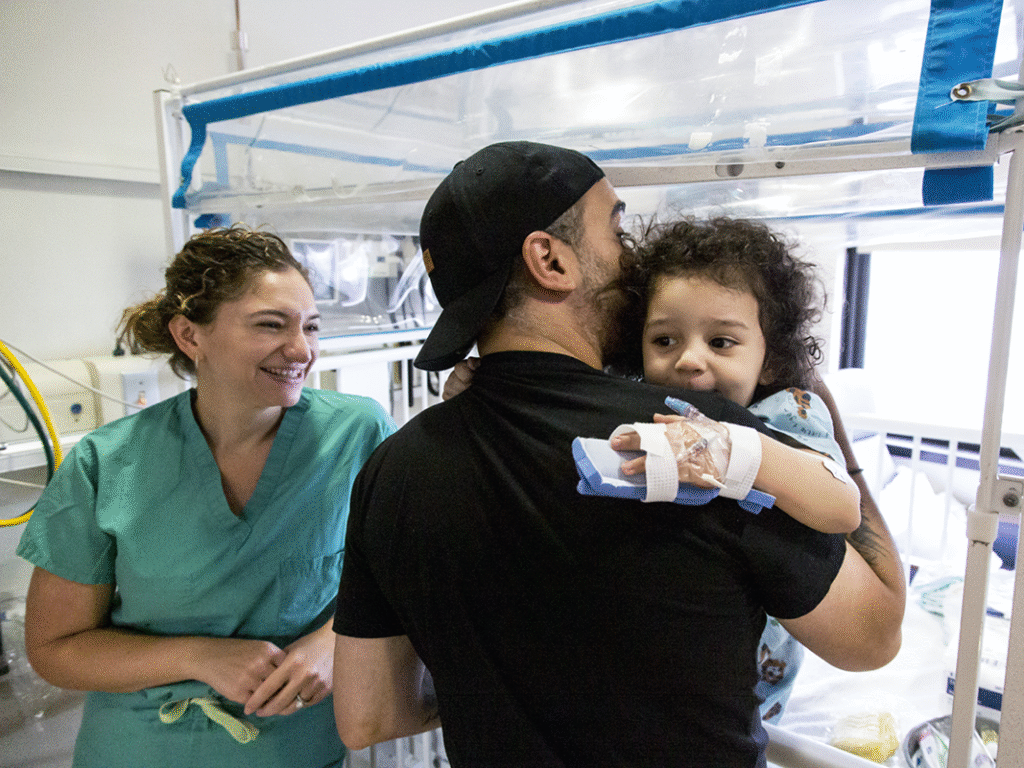
Maimonides’ newly renovated Children’s Emergency Department is now four times its previous size, with 32 private treatment areas to support the full continuum of pediatric emergency care for Brooklyn’s children. The facility, recognized by the New York State Department of Health as a Pediatric Center of Innovation, is one of only a few hospitals in the state to hold that designation.
In the trauma bay, specialized equipment is ready to quickly assess, diagnose, and treat life-threatening injuries, including performing pediatric trauma surgery when there’s no time to wait. The ED has 24/7 on-call subspecialists inpediatric orthopedics, plastic surgery, neurosurgery, otolaryngology, anesthesiology, and more pediatric subspecialties.
“Our care plans—for emergency care, post-acute hospitalization, and outpatient follow-up—draw upon the many clinical resources of the Children’s Hospital, like rehabilitation services, social work services, and child life specialists who deliver music and play therapy,” said Dr. Model.
A team built to handle the most complex cases
Maimonides Health has a highly trained pediatric trauma team, with all attendings at least double boarded in their givenspecialties, and some with triple board certifications.
Dr. Model herself holds triple board certifications in surgical critical care, pediatric surgery, and general surgery. Every trauma surgeon on the team is fellowship-trained in surgical critical care, and all three pediatric general surgeons carry fellowship credentials as well. Pediatric emergency medicine colleagues are double board-certified in both emergency medicine and pediatric emergency medicine.
Adult and pediatric trauma care operate in close collaboration. Rachel Caiafa, MD, Division Chief of Acute Care Surgery, Trauma Medical Director, and Director of Surgical Critical Care, works alongside Dr. Model and the pediatric trauma team to care for injured children when needed. She is also triple board-certified in general surgery, surgical critical care, and neurocritical care.
“We work together on a daily basis to take care of any injured kids together in a very collaborative way,” said Dr. Model. “We’re a group effort, informed by diverse clinical backgrounds and specialty expertise.”
The hospital also holds another national distinction—the program includes trauma-trained pediatric orthopedics.Pediatric trauma surgeon James Tucci, MD, possesses a triple board certification in orthopedic surgery, pediatric orthopedic surgery, and trauma orthopedic surgery.
The surgical team’s collaborative culture extends to training the next generation. Maimonides runs a surgical critical care fellowship, now in its third year, alongside a General Surgery Residency program with five residents per year.
Staying ahead of the science and continually improving
Quality improvement isn’t an annual exercise—it’s a monthly commitment.
“We keep up with the latest research in pediatric trauma, and we change our guidelines and protocols every month to reflect the most up-to-date processes,” said Dr. Model. “We run monthly journal clubs just for pediatric trauma, attended by both the trauma surgery team and the emergency medicine team, and multidisciplinary conferences to help our whole team keep up with the literature.”
A monthly collaborative pediatric trauma conference brings together pediatricians and subspecialists to review cases and verify that care is meeting the highest standards. It’s all part of the team’s American College of Surgeons verification process, and its own commitment to continual improvement.
Several active quality initiatives reflect the adoption of the most cutting-edge pediatric trauma clinical practices:
- Whole blood transfusion: Maimonides was the first hospital in New York City to adopt whole blood transfusion for critically injured children. “Whole blood has been shown in combat settings to have improved outcomes versus red blood cells,” said Dr. Model. “We incorporated this practice early on for faster recovery and better outcomes.”
- Radiation reduction: The team is actively substituting MRIs, X-rays, and ultrasound for CT scans when clinically appropriate, which reduces radiation exposure without compromising accuracy.
- DVT prophylaxis: A current initiative focuses on identifying which pediatric trauma patients with multiple fractures are at the highest risk for blood clots, and standardizing protocols to match.
- Blood draw reduction: New protocols for solid organ injuries, including liver, spleen, and kidney, help reduce the frequency of blood draws for stable patients.
Prevention is part of the mission
A pediatric trauma center’s responsibility goes beyond the trauma bay. Maimonides’ program includes community education on injury prevention. These efforts include training on proper car seat use, bike helmet guidance, and mass casualty incident preparedness. These are all part of a broader commitment to the children and families served.
For referring providers, primary care physicians can guide families toward trauma prevention practices and help foster awareness of emergency care and trauma resources before an emergency happens. That awareness can make a critical difference in the moments that matter most.
Brooklyn’s resource for pediatric trauma care
When a child in Brooklyn experiences a serious injury, Maimonides Children’s Hospital is ready to help. Recognized as the No. 1 top performer in the 2025 Vizient Quality Leadership ranking among 98 children’s hospitals nationally, the program combines the depth of a major academic trauma center with the accessibility of a community institution—right here in Brooklyn.
To learn more about Maimonides Children’s Hospital pediatric trauma and emergency services, visit Maimonides Children’s Hospital Emergency Department.