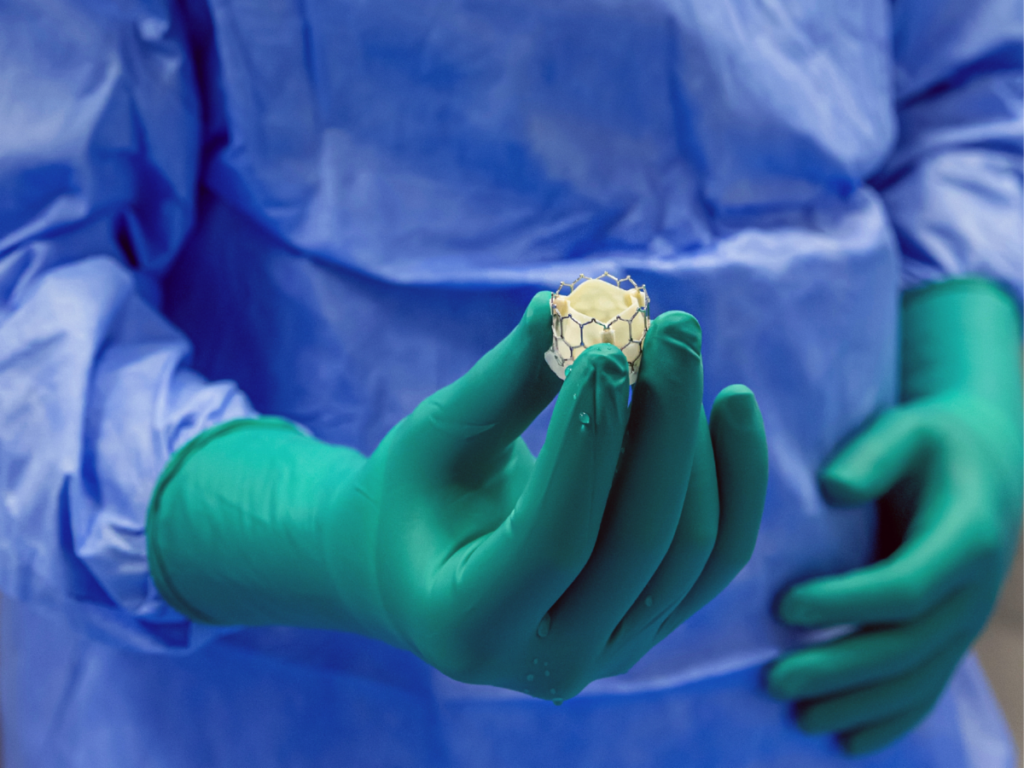
For patients with severe aortic stenosis, transcatheter aortic valve replacement (TAVR) can improve blood flow through a minimally invasive, catheter-based procedure. Careful planning before the procedure helps the heart team select the right valve, assess how it may interact with the patient’s anatomy, and prepare for potential complications.
Maimonides Health now uses an FDA-cleared, AI-driven modeling platform to support that work. The technology gives the structural heart team added insight as it plans complex TAVR procedures based on each patient’s unique anatomy.
From CT scan to digital heart
The platform uses the patient’s CT images to create an individualized digital model of the patient’s heart anatomy, allowing the structural heart team to then simulate several valve options within that model before the procedure begins. These simulations add patient-specific information to the imaging review that already guides valve selection and sizing.
The platform complements the advanced imaging Maimonides uses for complex cardiac procedures.
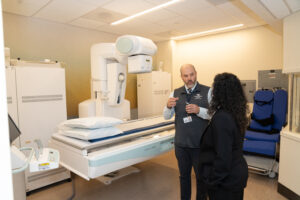
“Our hybrid ORs allow us to import previous scans and superimpose them over current, real-time images,” said Robert Frankel, MD, Director of Interventional Cardiology at Maimonides Heart and Vascular Institute. “This imaging supports precise valve placement during the procedure.”
The new modeling platform adds another level of information earlier in the process as the team develops the procedural plan.
The simulations provide additional guidance on valve size and help the team assess anatomy-related risks, such as annular rupture, coronary artery obstruction, and leakage around the replacement valve. The modeling also helps the team consider how today’s valve selection could affect options for future procedures.
“This AI-assisted tool gives us greater insight before the procedure,” said Shiv Raj, MD, an interventional cardiologist at the Heart and Vascular Institute. “We can simulate how different valves may interact with a patient’s anatomy and use that information to develop a more individualized plan for complex cases.”
Maimonides is among the first health systems in New York City to incorporate this type of predictive modeling into TAVR planning. The Structural Heart Center has performed more than 1,000 TAVR procedures since 2012. The new platform adds to the team’s extensive experience and imaging expertise that already guide the program’s approach.
More insight for complex TAVR referrals
For referring physicians, the platform provides additional information when a patient has complex anatomy or requires careful evaluation before TAVR. It can support the assessment of cases that involve challenging valve geometry, borderline sizing decisions, or a greater risk of anatomy-related complications.
“Referring physicians can contact us when a patient has complex anatomy or when the best approach is not immediately clear,” said Gregory Crooke, MD, a cardiothoracic surgeon at Maimonides’ Structural Heart Center and Surgical Director of the TAVR Program at the Heart and Vascular Institute. “This technology gives our team additional information to assess the options and develop a patient-specific plan.”
The technology supports Maimonides’ multidisciplinary approach to TAVR care. Patients who undergo a TAVR evaluation receive an assessment from a team that includes interventional cardiologists, cardiac surgeons, imaging specialists, and other members of the valve care team.
“Our multidisciplinary valve clinic brings together a full team of experts in one visit to assess and plan care,” Dr. Crooke said. “This collaborative approach can save patients time and help coordinate each step of their care.”
The team can review the modeling results together as it considers the valve options, potential risks, and procedural approach.
Make an appointment for TAVR evaluation
Combined with Maimonides’ hybrid operating rooms and experienced structural heart team, the modeling platform provides another resource for the careful evaluation and planning of complex TAVR cases.
Learn more about the Maimonides Structural Heart Center. To make an appointment or refer a patient, call 718-283-7364.