The Maimonides Aortic Center is Brooklyn’s only dedicated center for multidisciplinary diagnosis and treatment of aortic disease, caring for patients with aortic dissections, aneurysms, and ruptures.
Aortic disease is often diagnosed incidentally after it causes life-threatening emergency conditions, but for many patients, screening and early diagnosis can save their lives and those of their family members. About 20% of patients with thoracic aortic aneurysm or dissection have a first-degree relative with a similar disease1. The Maimonides Aortic Center Registry aims to ensure those at increased risk due to family history have easy, consistent access to screening and appropriate treatment.
Lifelong monitoring reduces mortality risk
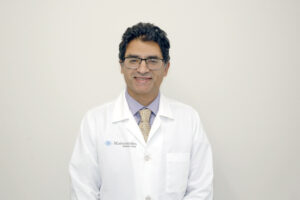
Benjamin Youdelman, MD, Co-Director of the Maimonides Aortic Center and a surgeon specializing in endovascular and thoracic aortic surgery, is passionate about building awareness of the role of family medical history in aortic disease. Dr. Youdelman is also the founder of the nonprofit organization Aortic Bridge and a board member of Think Aorta US. He conceived Think Aorta–Think Family, a Think Aorta initiative designed to increase awareness of inherited aortic disease.
“When it comes to aortic disease—as well as other conditions like heart disease, stroke, diabetes, and cancer—there is a fundamental lack of appreciation of the general reality that patients need to be aware of the medical history of their close relatives like parents, grandparents, and siblings as a predictor of their own health risks,” said Dr. Youdelman. “Patients and providers need to have that awareness that having a relative with a given condition puts them at a higher risk to develop it too. These conditions need to be adopted by the family as a family medical history, as opposed to an individual medical history.”
The Maimonides Aortic Center follows patients and families affected by aortic aneurysms and aortic dissections both before and after surgery through the process of cascade screening, a method used to identify individuals within a family potentially at risk of inheriting conditions that have been diagnosed in first-degree family members including parents, siblings, and children.
With lifelong monitoring, cascade screening, and early surgical intervention as needed, patients can decrease the risk of emergent aortic conditions and associated surgery, which carries a higher risk than elective repair of an aortic aneurysm. These measures can increase life expectancy by more than 25 years2.
Aortic disease family screening process
At the Aortic Center, patients may present with an emergency aortic condition or may get identified as having an aneurysm incidentally. Others have identified or suspected family history of aortic aneurysm, rupture, or dissection, and come to Maimonides to evaluate their risk.
Once patients at risk are identified, clinicians conduct a thorough evaluation, taking stock of family and personal medical history and utilizing imaging techniques including an echocardiogram of the heart, a CT scan or MRI of the chest, and an ultrasound or a CT scan of the of the abdomen to image the entire aorta from the chest to the legs.
“We connect the dots for patients, because these conditions are not always obvious, especially if family members died prematurely without an exact known cause,” said Dr. Youdelman. “A good example is when people that hear that their siblings, parents, or grandparents died of a ‘massive heart attack’ at age 50 or younger, with no other known medical issues. For patients with aortic aneurysm and enlargement, that’s a huge sign that the family’s issues are related and they may need to receive an earlier elective procedure to help reduce their risk an aortic emergency and, at worst, mortality.
“We believe very strongly that it’s genetic in origin, but that we don’t know all the genes. About 80% of the patients that I see in the office do not have a clearly identified gene, but, obviously, if somebody has multiple family members with aortic disease, it is entirely possible that they possess a gene or multiple genes that have not yet been identified to be associated with aortic disease. When I first began practicing medicine, there were only four or five genes identified. Now, there are 30 confirmed, and we believe there are many more.”
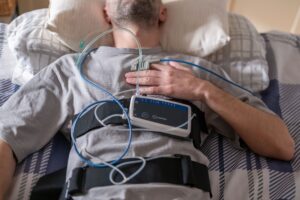
For the majority of patients, surveillance plans include annual or biannual CT scans and echocardiograms.
Specific timing of surgery depends on individual factors like:
- Whether they are in need of urgent or emergent surgery
- Whether they have already had surgery or it is part of their future care plan
- Whether they present after having had a problem years ago, or it’s a new problem
- Size of the aorta
- Family history of aortic disease or unexplained sudden death
Surgical interventions generally occur when the aorta is greater than 5 centimeters in diameter. Roughly 10% of the overall population is estimated to have an enlarged aorta measuring greater than 4 centimeters and about 4% of the population is greater than 4.5 centimeters. That’s roughly 100,000 out of the entire population of Brooklyn, and a significant subset of this population is never screened or treated with interventions.
Strong outcomes drawn from multidisciplinary surgical approach
Maimonides is home to Brooklyn’s only comprehensive aortic center, giving the community access to the most advanced aortic therapies and interventions. The center has expanded its endovascular treatment of aortic disease in keeping with the advancing technology that has emerged in recent years.
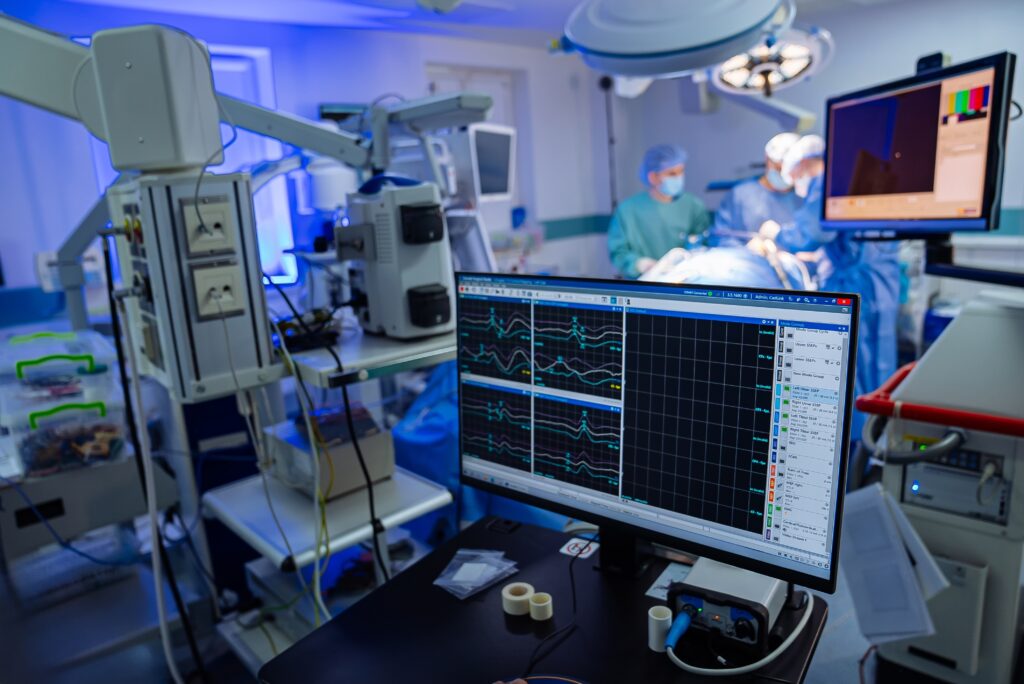
Most notably, rapid expansion is occurring in endovascular treatments of diseases involving the aortic arch and the branches of the abdominal aortas, including endovascular aortic arch repair. From the vascular side, greater options for branch grafts in the abdominal aorta are also emerging. Open abdominal aortic surgery and open aortic arch surgery are now being performed with minimally invasive procedures, translating to lower risk of complications and shortened recovery times and hospital stays for patients.
The center’s multidisciplinary focus means that each patient’s case is reviewed by both cardiac and vascular surgical teams, who confer weekly to determine the safest, most minimally invasive, and easiest way to deal with the lifelong management of each patient’s condition.
“The incredible working relationship we’ve fostered between our heart surgeons and vascular surgeons is critical to our integrated, full-service approach,” said Dr. Youdelman. “This kind of collaboration can’t be found just anywhere. With my years of experience in this practice, I would advise any patient with aortic concerns to ensure they’re receiving care from a team with the capacity to collectively manage the sum total of that problem. That’s the service that we’re proud to offer. This is a lifelong disease, and you want to be treated by people that look at you and your family as a sum total, not just a set of data.”
Learn more about Maimonides Aortic Center. For more information, to make an appointment, or refer a patient, call 718-283-7000.
References
1: Hannuksela, Matias, et al. “Screening for Familial Thoracic Aortic Aneurysms with Aortic Imaging Does Not Detect All Potential Carriers of the Disease.” Aorta (Stamford, Conn.), vol. 3 (1): 1–8. 1 Feb. 2015. DOI:10.12945/j.aorta.2015.14-052
2: Isselbacher, Eric M., et al. “2022 ACC/AHA Guideline for the Diagnosis and Management of Aortic Disease: A Report of the American Heart Association/American College of Cardiology Joint Committee on Clinical Practice Guidelines.” Circulation, vol. 146, 24 (2022): e334–e482. DOI:10.1161/CIR.0000000000001106