Maimonides Heart and Vascular Institute has expanded its cardiac capabilities with new outpatient care technologies including a wearable, remote monitoring heart failure management system and remote pulmonary pressure monitoringdevice, allowing for earlier intervention, reduced hospitalizations, and greater peace of mind for patients with cardiopulmonary conditions. Combined with new and renovated facilities across Brooklyn, these investments make the institute a stronger partner for referring providers managing their most complex cardiac patients.
When the stakes are highest, where patients go matters
For patients managing heart failure or cardiopulmonary conditions that require more than routine management, the quality of their referral destination directly shapes their outcome. Early intervention and continuous remote monitoring can mean the difference between a patient staying home and a patient being readmitted within 30 days.
Maimonides Heart and Vascular Institute has built its program around exactly that standard. These new technologies give the team earlier, more precise opportunities to care for patients, often before they need to be hospitalized.
Catching heart failure before it worsens: Remote heart failure management system
For patients with heart failure, the gap between symptom onset and hospitalization can be narrow. A wearable, remote monitoring heart failure management system is designed to close that gap.
The device is an external patch the size of a credit card, worn continuously on the left side of the chest. Using radio frequency technology, it measures fluid levels in the chest in real time, transmitting data that the heart failure team monitors remotely.
“We can detect those changes before the patient has symptoms or needs to come to the hospital, so we can help keep them at home and reduce the need to travel for treatment or assessment. We’re still monitoring what’s going on without requiring an office visit every time,” said Steven Sorci, DO, a Maimonides Health cardiologist board-certified in internal medicine, advanced heart failure, and transplant cardiology.
The monitoring system is ideal for both post-hospitalization management and complex outpatient cases where fluid levels are difficult to track through standard office visits. The goal is prevention and keeping recently discharged heart failure patients from returning to the hospital by enabling earlier, more responsive medication adjustments.
“Coordination with referring providers is built into the program,” Dr. Sorci said. “Whether patients are primarily under our care or not, we stay in close communication with their general cardiologist, primary care physician, and other providers, adjusting medications collaboratively and keeping everyone aligned on the plan,” said Dr. Sorci.
The technology is not yet widely used in the immediate Brooklyn area. The use of the system requires a dedicated heart failure monitoring team, making Maimonides well suited to offering it for the benefit of cardiac patients.
Pulmonary pressure monitoring at home
For patients with more advanced heart failure who need continuous, long-term monitoring, Maimonides now offers new technology that delivers real-time pulmonary artery pressure data directly to the care team.
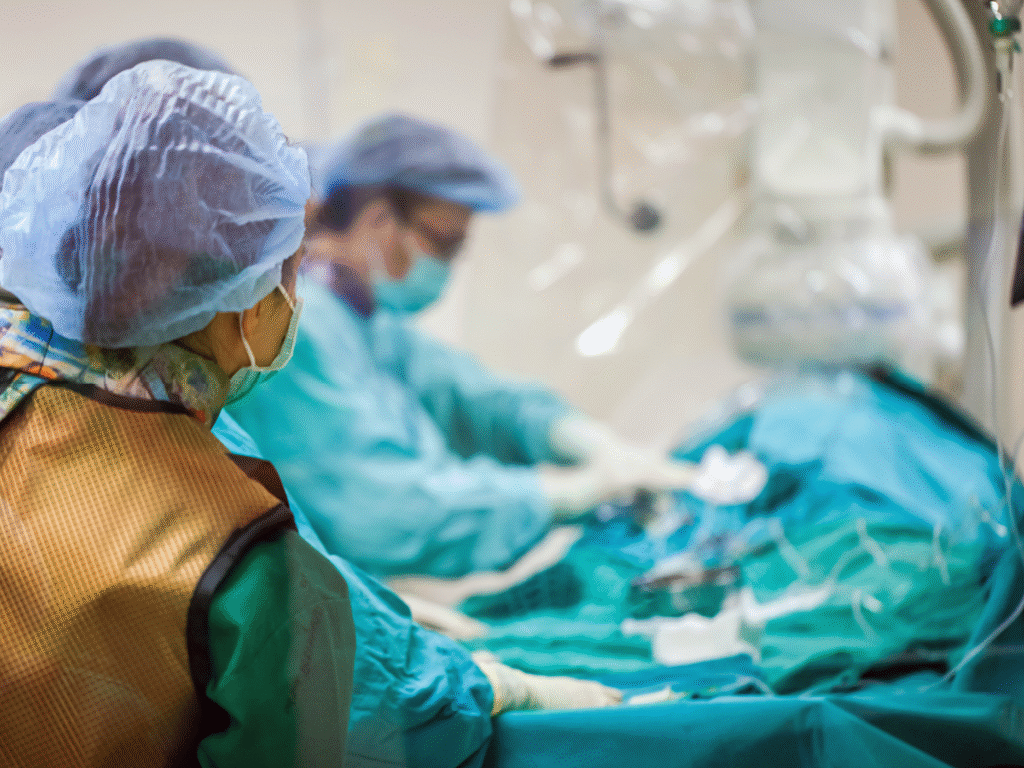
The small, implantable sensor, roughly the size of a paper clip, is placed in the pulmonary artery during a cath lab procedure. Once implanted, patients take a daily reading at home by lying on an external wedge-shaped device for approximately two minutes. That data is transmitted automatically to the team, informing ongoing medication management and providing care teams with early warning of complications that may arise.
“By monitoring readings remotely, we hope to keep patients out of the hospital and help limit their symptoms,” said Dr. Sorci. “Usually, we can see changes to their pulmonary artery pressures about three weeks before they have symptoms and need to be hospitalized. We can really get ahead of it and help patients not only feel better, but also avoid the need for inpatient care.”
Unlike the remote monitoring heart failure management system—which Dr. Sorci describes as a temporary monitoring tool used while working toward a longer-term solution—the pulmonary artery pressure monitoring device is intended to remain in place indefinitely. The data it captures goes beyond what a standard office visit can provide. The clinical team gets a continuous review of what’s happening beneath the surface, including pulmonary artery pressures, heart rate trends, and activity patterns.
The device also reduces how often patients need to travel for appointments, which is important for Brooklyn patients. Many of these patients already see multiple specialists across the city.
“When we reduce the number of in-person visits without sacrificing clinical oversight, it makes a significant quality-of-life difference for patients,” said Dr. Sorci.
The team’s monitoring role is designed to complement, not replace, existing provider relationships. When data suggests a patient’s symptoms may have a non-cardiac cause, that becomes a prompt to coordinate with the appropriate specialist.
“We can better triage and manage where patients need to go, so they get the care they need,” said Dr. Sorci.
Heart and vascular care by the numbers
- Top 1% of U.S. hospitals for survival (CMS)
- High Performing in heart attack, heart arrhythmia, heart failure, and pacemaker implantation (U.S. News & World Report, 2025–2026)
- Top 5 hospitals in New York State for heart attack and heart failure survival
- Highest TAVR quality rating for 30-day follow-up
- Gold Level Center of Excellence in Life Support (ECMO), two consecutive years
Completed and upcoming facility investments to match clinical growth
At the Heart and Vascular Institute, clinical expansion initiatives are matched by investment in facilities. In 2024, a new cardiac catheterization laboratory opened at Maimonides Midwood Community Hospital, bringing cath-based procedures closer to home for more Brooklyn patients. A full renovation of the cath lab at Maimonides Medical Center is currently underway, with the upgraded facility expected to open in 2026.
A partner in complex cardiac care
For referring providers managing patients with heart failure or complex cardiopulmonary conditions, the Maimonides Heart and Vascular Institute offers growing innovations, investing in new technologies to support better outcomes and stronger provider collaboration across Brooklyn.
To refer a patient or learn more, contact Maimonides Heart and Vascular Institute at 718-HRT-BEAT (718-478-2328).